The palm tree shadows showed as designs on my legs. The dry sandy path leading me to the cenote left white specs of sand on my sandal-laden feet. The surrounding area was a swamp-like forest.
Our destination was a cenote, a natural pool of water that is caused by collapsed bedrock thereby exposing ground water from beneath.
My friend and I were told the cenote was closed. It was our last day in Mexico so that wouldn’t do. We convinced the gatekeepers to let us in early so we could meet back up with our fellow bachelorette-celebrating friends to catch out flight.
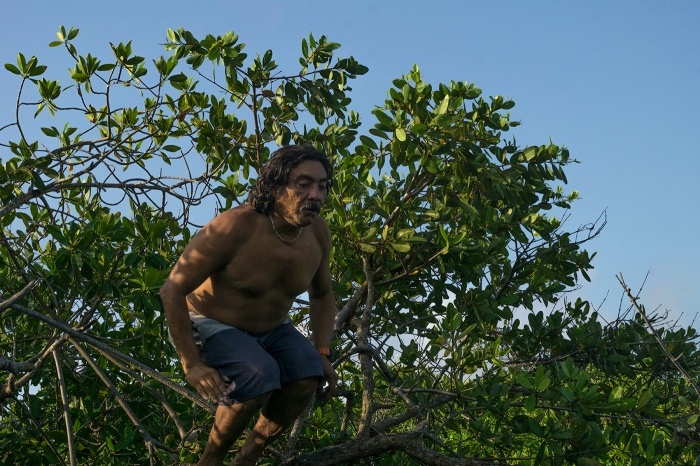
As we reached the mangrove-surrounded cenote, we saw we were not alone. Three locals, two men and a woman, were also enjoying an early morning swim. The men sat on a low hanging tree branch, surrounding a cooler of beer.
My eyes fell on the woman who was fully submerged in the water. She seemed out of place, fully clothed in jeans and a long sleeve shirt instead of a bathing suit.
She looked on curiously as we debated whether to jump in.
Our question was whether there was anything in the depths of the dark water that might try to eat us. The woman appeared carefree. I put my trust in her confidence and followed suit by jumping in.
A few joint cannonball sessions and we were taking photographs together.
Cannonballing into the mangrove-surrounded cenote.The gatekeeper joined…
Five days earlier, seven of us had met at the Cancun airport to celebrate our friend’s last days of singledom. It was my first time in Mexico and a much-anticipated trip after another New England winter.
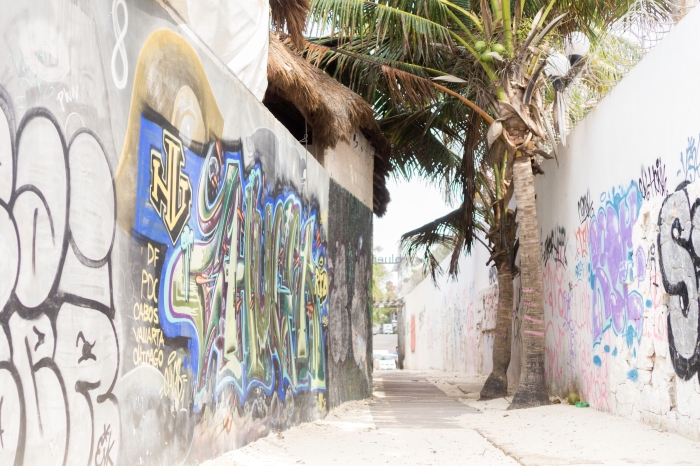
Our first stop was Playa del Carmen, a seaside city in the Gulf of Mexico, approximately thirty minutes from the Cancun airport. The stretch of beach is lined with restaurants and hotels. The city has lots of nightlife options.
A pathway from the beach to downtown.
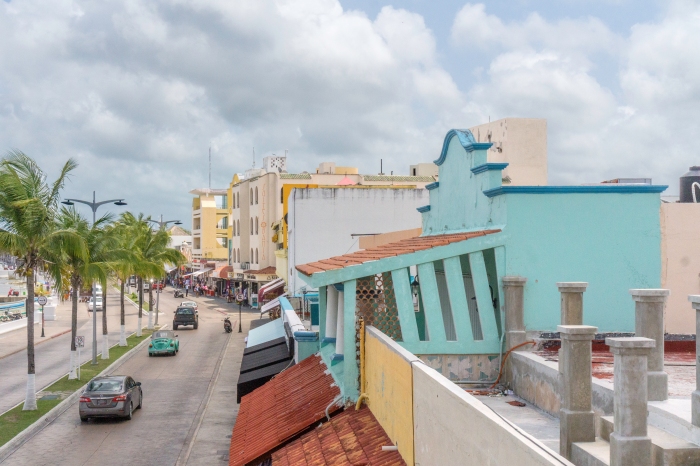
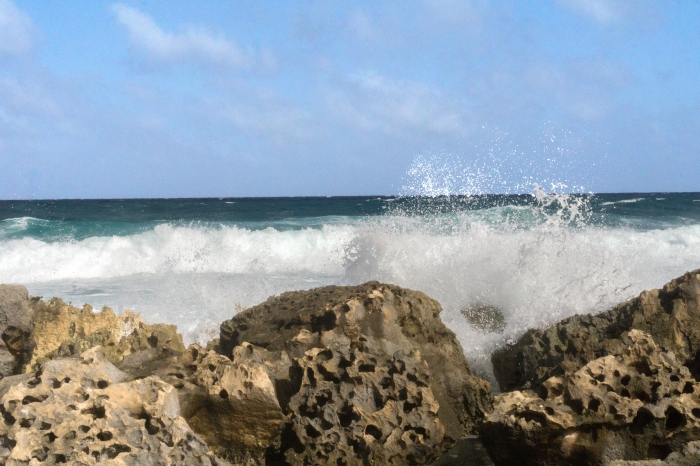
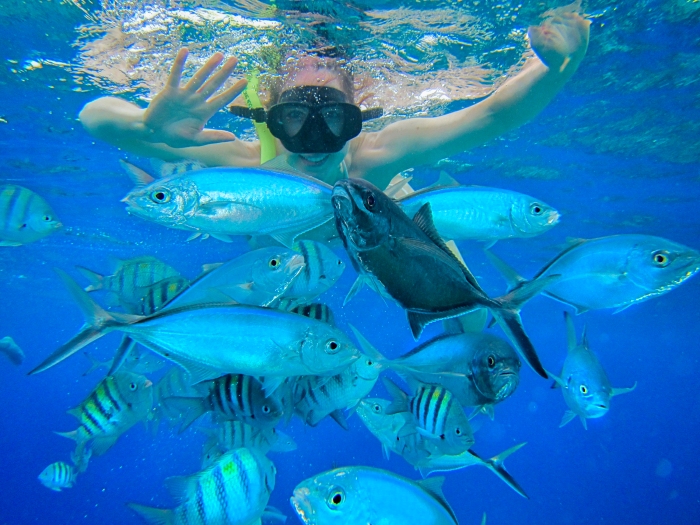
On our second day, we took a ferry to the island of Cozumel for an active day of snorkeling and exploring the beaches on the far side of the island.
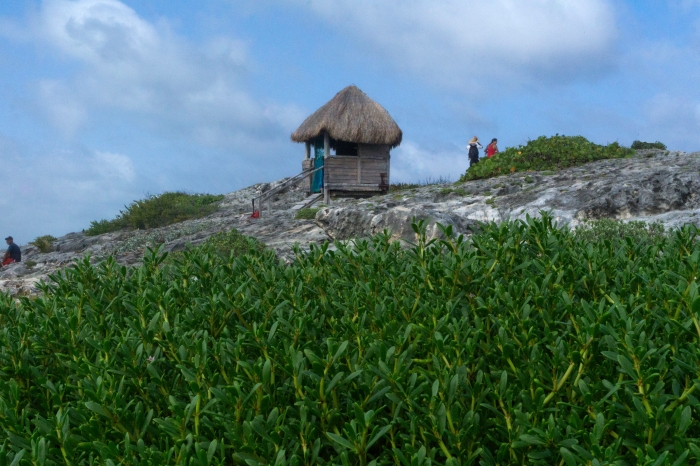
On a rooftop, looking out at the colorful and palm tree-lined main street in Cozumel.Waves crashing on the far-side of the island.Lifeguard stand surrounded by rock and greenery.Beach bug.Snorkel session.
After experiencing the nightlife, and surviving a barefoot walk on the cracked pavement, we headed to Tulum, a yoga retreat town. This laid back beach town provides words of wisdom from street signs to inviting beach signs.
Self-explanatory.
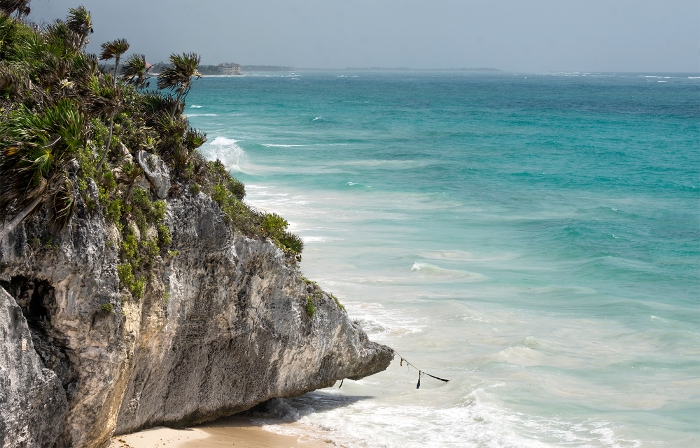
Tulum also offers Mayan ruins, which are strategically placed on a dramatic cliff that plunges into the ocean.
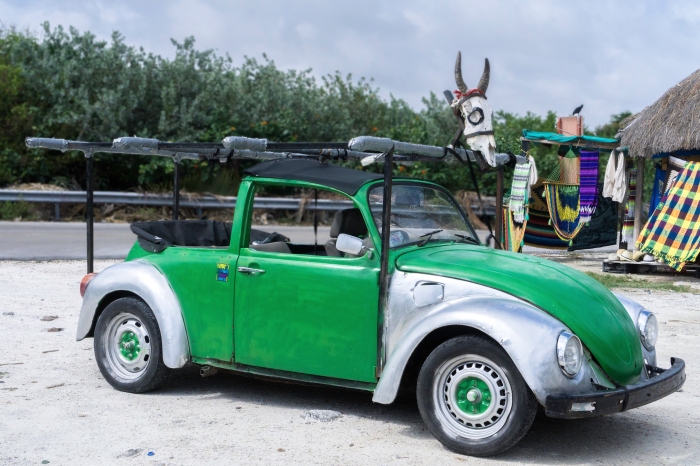
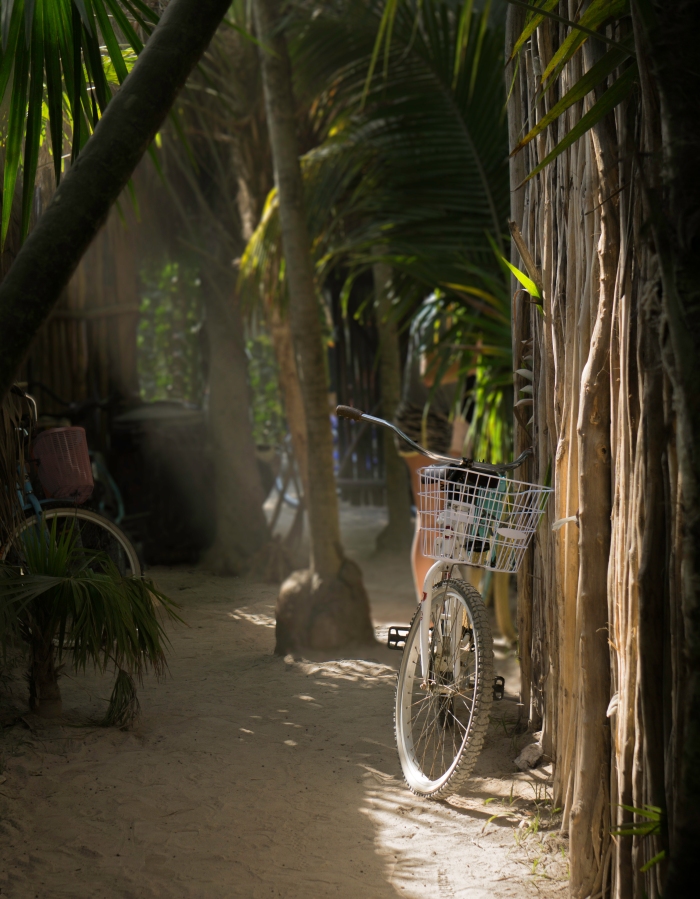
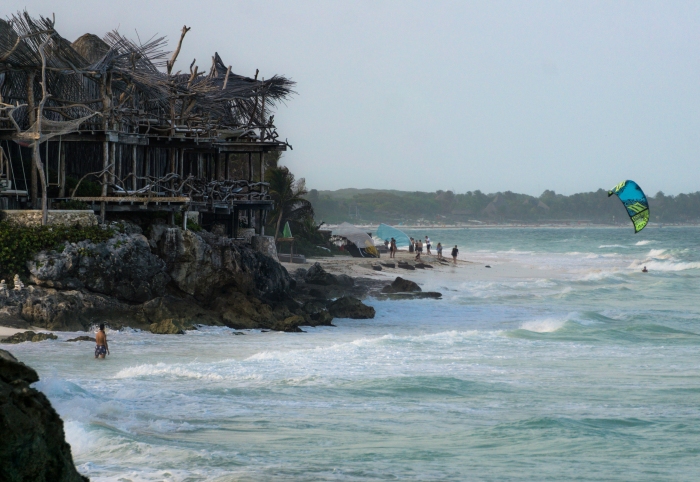
View from the ruins.The essentials: hydration, transportation, and readiness for the beach.We rented bicycles to explore the ins and outs of Tulum.Beach bungalow.
Overall, the coastal Mexican towns of Playa del Carmen and Tulum make for a fun tropical getaway. With warm turquoise waters, fantastic tacos, historic ruins, and colorfully sewn fabrics you can’t go wrong. These areas are touristy for good reason.
Covered in soot from head to toe, looking like a coal miner, I stood atop Heiligenberg, a hill in Heidelberg, Germany. I was sitting on a log, leaning in close to a bon fire that was fiercely spewing flames from its depths. My hands reached out toward the flames, welcoming the warmth.
It was a chilly May night. I was in Thingstätte, an amphitheater built by the Nazis in 1935 to accommodate propaganda rallies and festivals. I was taking part in Germany’s May 1st holiday, a celebration of spring and worker’s rights.
Sunset along the Neckar River prior to the Schlossbeleuchtung (castle illumination and firework display). Heiligenberg to the right.
The outdoor amphitheater was built on the side of a hill. A person sitting in the last row, at the top of the amphitheater, would sit upon a long curved stone slab. The seating was designed in a semi-circle that looked upon the main spherical stage with a gate-like structure behind it.
The amphitheater was surrounded by trees, which, like many of the amphitheaters built during the “Thing” movement, incorporated natural surroundings. A Thing was an ancient Nordic/Germanic public meeting in an outdoor setting. During the 1930’s about 1,200 amphitheaters similar to Heidelberg’s had been planned, however only about 40 were actually built because the movement was not very popular with the people and the Nazi Party lacked interest after a while.
A tower peaks above the lush greenery on the side of Heiligenberg
View of the Berg from old town Heidelberg
Strangers sat across from me on the other side of the fire, chatting and laughing with their friends. A few others were dispersed in groups around the amphitheater with mini bon fires they had created. They were continuing the revelry that had begun on the previous day.
Everyone was enjoying the moment, except my friend and me. Our merriment had waned in the wake of an upsetting event, of which the effects were now in the forefront of our minds.
It was the early morning hours of May 2. The moon hung above me, big and beautiful, however all I wanted in that moment was for the sun to come up. My friend and I had agreed we would wait together until sunrise so we could see the ground with clarity. Only then, with light, we would be able to search the grounds accurately for our purses, which had been stolen earlier in the night.
I was grateful my apartment keys were in my jean pocket. With keys, I could hide away for a few hours and forget that I had no passport to get me back to the U.S., zero Euros on hand, and no bankcard to access funds. I needed rest before attempting to communicate my situation to the police in another language.
Earlier, the day had begun with glee. University students gathered at the base of Heiligenberg to enjoy a hike to the top. It was tradition to walk up the hill to Thingstätte and enjoy barbeques, conversations, and bon fires as several musicians played songs. A day that had started with such joy of new friendships and discovery of culture was left sour.
While that day was filled with mixed emotions, the actual place is magical. The city is akin to something out of a Grimm fairytale. There are several idyllic paths to get to Thingstätte, however the most awe-inspiring is Philosophenweg, or Philosopher’s path. Der Philosophenweg is a path leading up the hillside next to the Neckar River. It provides beautiful views of old town Heidelberg and the romantic ruins of the Schloss, or castle.
Heidelberger Schloss
Hillside to the left of the castle
Crew teams ready for their races along the Neckarwiese
Playing frisbee along the banks of the Neckar
Looking down on the city from the castle
Getting to Philosophenweg is interesting in itself. One begins from the old town, proceeding over the Alte Brücke, or old bridge. The Alte Brücke has two notable white towers on either side of the entrance. You can stop and take a photo next to the bronze monkey statue, which holds a mirror in one of his hands and has the other extended out, as if ready for a high-five. He has two accompanying mice nearby. Legend has it, if you touch the monkey’s mirror you will have good health, touch the two mice you will be gifted with fertility, and touch the monkey’s hand you will return to Heidelberg.
Hauptstrasse-the main street
After you cross the bridge, and probably take hundreds of photos of the beauty surrounding you, head to the left at an angle to find a path called Schlangenweg, or snake path. Schlangenweg leads to Philosophenweg. After stopping for fabulous views or a picnic along the way, you can continue up to the top of Heiligenberg, where Thingstätte is located.
A nice time to walk Philosophenweg is in the evening, when the sun is setting because the light accentuates the orange rooftops of the old town. Reflections of buildings and crew teams rowing also offer interesting shadows on the river.
The path is lined with tropical plants from the Mediterranean, North Africa, and Asia. It is unusual to see these plants in Germany, however the Neckar Valley’s microclimate accommodates the plants.






 Travels With Alison